
Understanding Tax Deducted at Source (TDS): A Comprehensive Guide
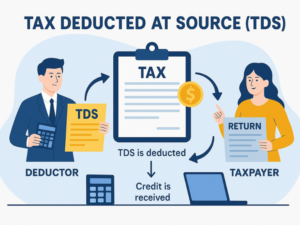
Tax Deducted at Source (TDS) is a vital mechanism of tax collection in India. Learn how TDS works, applicable rates, Form 26AS verification, and refund procedures.
What is Tax Deducted at Source (TDS)?
TDS is a mechanism introduced by the Income Tax Department where tax is collected directly at the point of income generation. The deductor (who makes payment) deducts tax before paying the deductee (who receives income).
Common TDS Sections and Rates
- Section 192: TDS on Salary income based on slab rates.
- Section 194C: Payments to contractors and sub-contractors.
- Section 194J: Fees for professional or technical services (10% or 2%).
- Section 194I: TDS on Rent payments above threshold limits.
- Section 194A: TDS on Interest income from banks and fixed deposits.
Checking TDS via Form 26AS & Annual Information Statement (AIS)
Every taxpayer can verify TDS deposited against their PAN through Form 26AS and AIS on the e-filing income tax portal. Matching TDS certificates (Form 16/16A) with AIS records prevents discrepancies during ITR filing.
Claiming TDS Refunds
If total TDS deducted exceeds your actual income tax liability for the financial year, you can claim a complete refund of excess TDS by filing your Income Tax Return.
If you have questions regarding tax planning, financial compliance, or advisory services, feel free to reach out to CA Karishma Singhavi for expert assistance.
Disclaimer: The information in this article is provided for general guidance and educational purposes only and does not constitute formal legal or financial advice.